LEO
Warrants
A warrant is a standing instruction to the whole department: arrest this person, search this place, bring them before the court. Once issued it follows the subject everywhere — it shows on their record, it surfaces when anyone runs them, and it turns their file red.
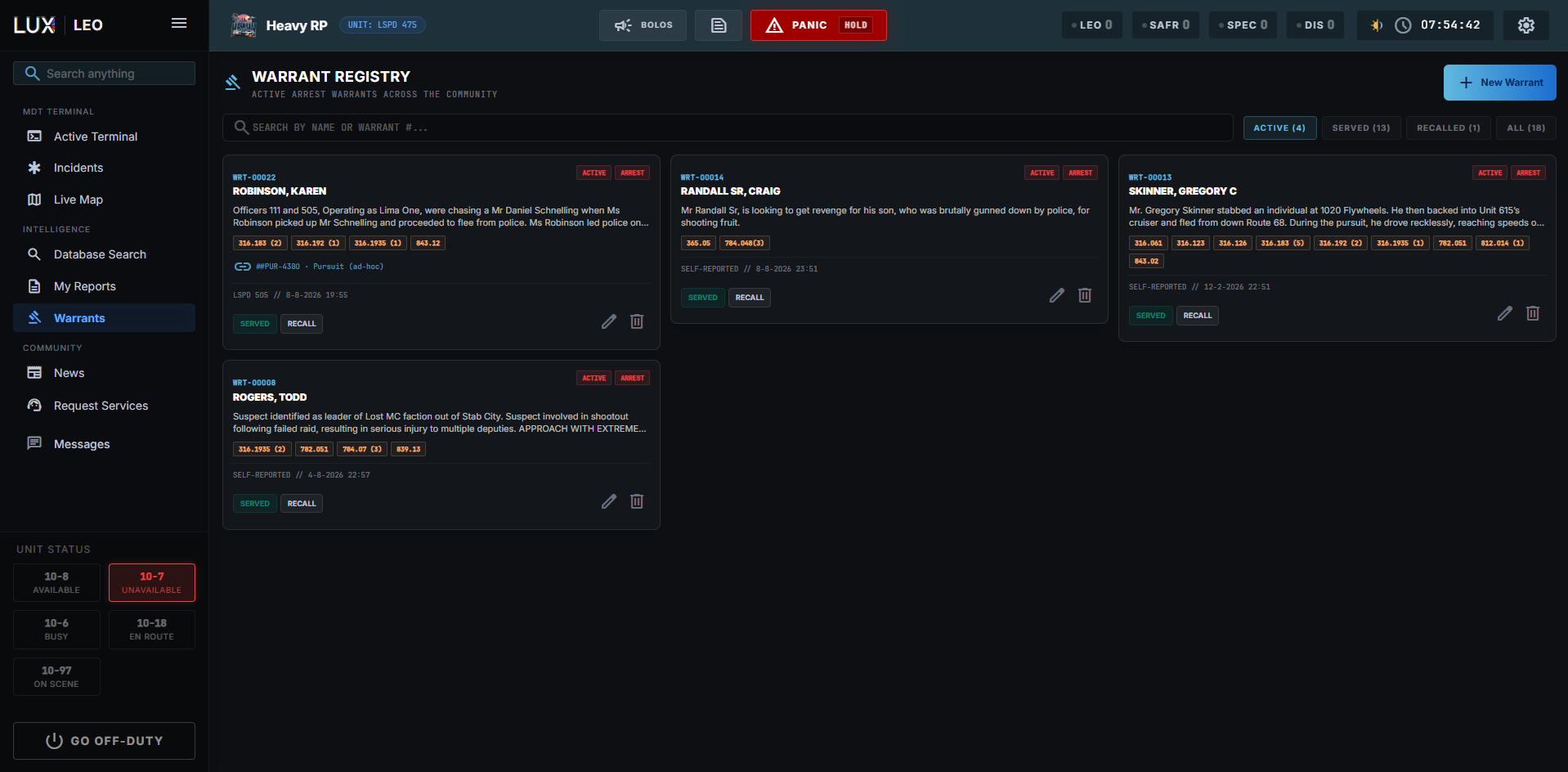
The registry
Warrant Registry lists what is out, filtered by ACTIVE, SERVED, RECALLED or ALL, and searchable by name or warrant number.
A warrant past its expiry date drops out of ACTIVE by itself. Expiry is worked out from the date rather than set by anyone, so nobody has to remember to clean up after a deadline passes.
Issuing one
The warrant form asks for:
| Field | Notes |
|---|---|
| Subjects | searched by name or date of birth; more than one is fine |
| Warrant Type | Arrest, Search or Bench |
| Issued and Expires | expiry is optional — leave it empty for an open warrant |
| Reason | the probable cause. Required. |
| Charges | searched from the penal code, each with a count |
| Linked Incident | optional — ties the warrant to the call it came from |
Write the reason for someone who was not there. It is the part a defence reads back to you, and "he ran" is not grounds.
Charges carry a count, and the fine and jail time are per count — three
counts of the same offence is one line reading 3×, not three lines. See
Reports & Charges.
Straight from a report
An investigation usually ends in warrants rather than charges. ISSUE WARRANT(S) inside a report opens this same form with the subjects, the charges and a reference back to the report already filled in — one warrant per subject, typed once. That link stays, so whoever reads the warrant can open the case file behind it.
Serving it
SERVED on an active warrant closes it out. On an arrest warrant it also creates the arrest report for you, with the subject and the charges from the warrant already on it — you fill in the narrative and publish.
That is the intended route from warrant to paperwork, and it is worth knowing because doing it the other way round leaves you typing the same charges twice. If the warrant goes to SERVED but the report does not appear, the CAD says so separately rather than pretending it worked.
RECALLED is the other ending: the warrant is withdrawn without being served. Use it when the grounds fall away — not to tidy up a warrant that was executed.
What the subject sees
A civilian sees their own warrants in their judicial file, including the charges. They cannot remove one you issued.
They can add a warrant to their own character — that is a deliberate roleplay tool for a court order played out in character, and it reads exactly like one you issued. If a warrant appears that no officer remembers writing, that is where it came from.