Admin Settings
Incident Types
What a call can be. Dispatch picks a type when creating a call, and the type decides how it is labelled, coloured and prioritised across the console and the map.
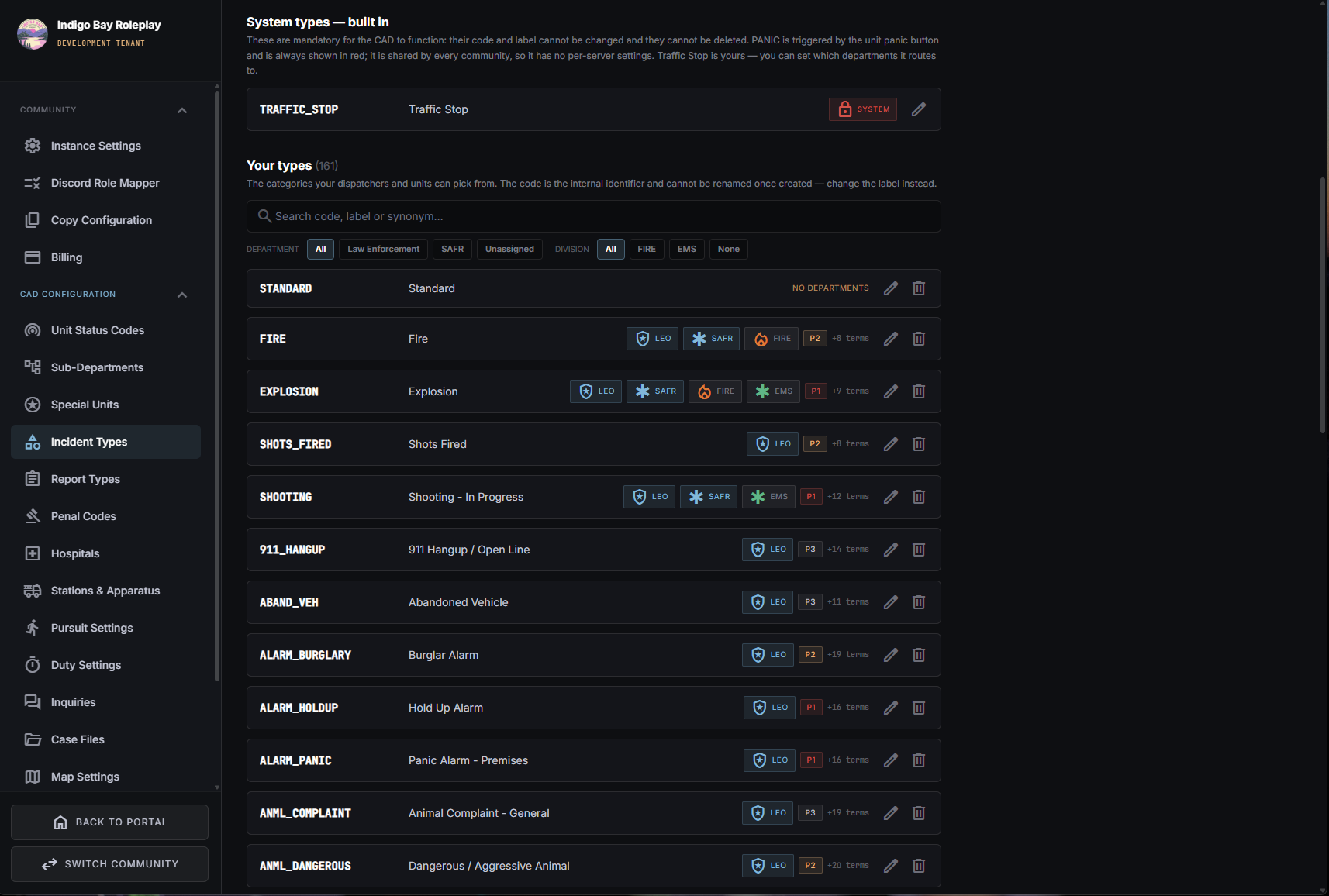
System types and custom types
System types are built in and cannot be deleted. TRAFFIC_STOP is the clear
example: a unit running /ts in the game creates a call of that type, so the
flow has to be able to rely on it existing.
Everything else is yours: structure fire, MVA, domestic, whatever your community runs.
Synonyms are the useful part
Each type carries synonyms — rollover, fender bender, MVA all pointing
at the same collision type.
This is what makes the picker usable under pressure. A dispatcher typing what the caller just said finds the right type without knowing what you named it, and two dispatchers who use different words land on the same one. A type without synonyms is only findable by people who already know its exact name.
Add the words your community actually says, including the wrong ones.
Starting points
A type can carry starting points — the standing instruction for that kind of call. It is where "who do we send by default" and "what does this usually need" belong, so a new dispatcher is not guessing.
Keeping the list workable
Fewer, broader types beat many narrow ones. Every type is another entry in a picker used while somebody is talking, and the difference between six collision types is rarely worth the time it costs to choose between them mid-call.
Deleting a custom type does not delete the incidents already filed under it — their history stays intact.